Hargita Népe – Transylvanian Daily Newspaper
Native Language, Profession, Community: Eleven Years in the Making The „Our Structures–Transylvania” (Építményeink–Erdély) Conference
An interview with civil engineer László Szalay, founder of the „Our Structures–Transylvania” conference series.
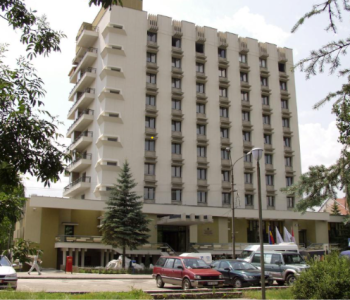
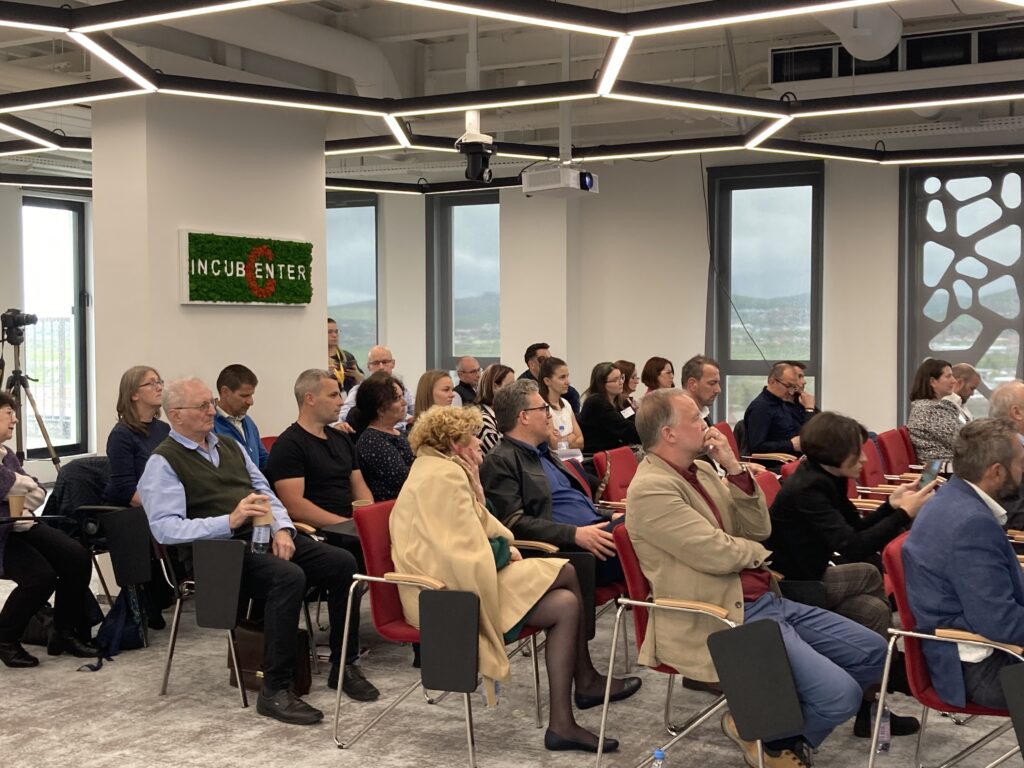
Civil engineer László Szalay, Managing Director of Konferencia Iroda Bt., is organizing the „Our Structures–Transylvania” professional conference for the eleventh time. The event will take place on January 29–30 at the Küküllő Hotel in Székelyudvarhely (Odorheiu Secuiesc). Over the years, the event has become a key meeting point for the Hungarian-language technical and professional community in Transylvania. On the occasion of this year’s gathering, we spoke about the origins of the initiative, the importance of professional dialogue, and the future of the conference.
– How did the idea for the „Our Structures–Transylvania” conference come about?
– The decision was actually the result of a longer process. In Hungary, we have been organizing the „Geotechnics” (Geotechnika) conference for over thirty-five years; in the mid-2000s, it was held at the Savoyai Castle in Ráckeve. After a while, I noticed that an increasing number of colleagues from Transylvania were attending these events. I particularly remember when a professional from Sepsiszentgyörgy (Sfântu Gheorghe) signed up to participate—arriving with an open mind, a keen interest, and a genuine professional curiosity. As time passed, more and more people—primarily geotechnical engineers—began arriving from Transylvania. During our conversations, the possibility of them participating as presenters came up, but in the end, many backed out. It wasn’t a lack of professional expertise that held them back, but rather a lack of confidence in using technical terminology in Hungarian. That was when the idea took shape: there was a need for a professional conference in Hungarian, held in Transylvania, that would provide a safe environment for giving presentations, learning, and engaging in dialogue.
– What was the primary objective of the conference?
– The most important goal was to enable Hungarian-speaking technical professionals to listen to and deliver presentations in their own mother tongue. This is not merely a linguistic matter; it is also a question of mindset. One can discuss technical issues with far greater nuance and precision when expressing oneself in one’s native language. Furthermore, a specific aim was to preserve and promote Hungarian technical terminology, ensuring that these terms do not fade into the background of everyday professional practice.
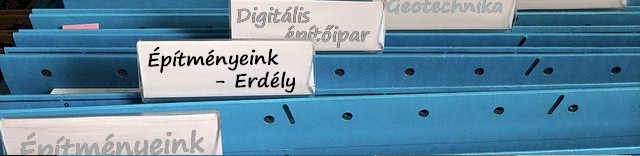
The early years were not easy; it took many enthusiastic companies, professionals, and a collaborative effort from supporters to get the conference off the ground and help it gain a firm footing. Today, I can confidently say that the *Építményeink–Erdély* (Our Structures–Transylvania) event has truly come into its own, establishing itself as a stable professional forum.
– What does the name „Építményeink” (Our Structures) signify?
– The choice of name was deliberate. The term „Our Structures” encompasses everything belonging to our built environment: buildings, roads, bridges, civil engineering structures—the entire spectrum of vertical construction, civil engineering, and infrastructure development. We did not want to focus on a single, narrow field; rather, we aimed to provide an umbrella under which a wide variety of professional topics and approaches could be presented.
– What added value does a conference like this offer its participants?
– I always say that a good presentation achieves its purpose when it does more than just inform—it prompts the audience to think. Attendees should gain something extra to add to their existing knowledge: a new perspective, an alternative solution, or an idea they can later incorporate into their own work.
I consider the transfer of knowledge between generations to be particularly important. For instance, older colleagues have shared insights into construction practices during the Ceaușescu era—a time when they often had to devise creative solutions in the face of material shortages. These experiences remain instructive today and serve as a valuable complement to the modern approach, which is rooted in standards and digital technologies.
– How has the composition of the participants evolved over the years?
– In the beginning, participants from Transylvania accounted for about 40 percent of the total. This has changed significantly: currently, roughly 80 percent of the attendees are professionals from Transylvania, while 20 percent come from Hungary. We select the locations deliberately, following a „crop rotation” approach—Târgu Mureș (Marosvásárhely), Piricske (near Miercurea Ciuc/Csíkszereda), Gheorgheni (Gyergyószentmiklós), Sfântu Gheorghe (Sepsiszentgyörgy), and Odorheiu Secuiesc (Székelyudvarhely) have all served as venues—always prioritizing cities with a strong Hungarian professional presence.
– To what extent is the program tailored to the needs of the participants?
– Very much so. We frequently ask past participants what topics they would like to see covered. This is how, for instance, fire safety—specifically the presentation of digital record-keeping systems—was included this year. The session explores how fire safety equipment in institutions, such as hospitals and schools, can be managed via a cloud-based system, making it easily verifiable and transparent. We also welcome representatives from local fire departments to this presentation.
– What role do young people play in the conference?
– From the very beginning, participation has been free of charge for university students. In the early years, only a small group of students took advantage of this opportunity; today, however, some of those young people return as presenters. For me, this is one of the greatest successes: seeing a professional community truly taking shape—one that spans across generations.
– What is the long-term mission of the conference?
– The *Építményeink–Erdély* (Our Structures–Transylvania) conference aims to build bridges between professional cultures, ways of thinking, and languages. Our ongoing goals include increasing the number of participants, maintaining the high standard of the presentations, and fostering professional and business connections both within and beyond the borders. If we can sustain this, the conference will truly fulfill the role we envisioned for it at the start.
Ildikó Nagyálmos – Hargita Népe